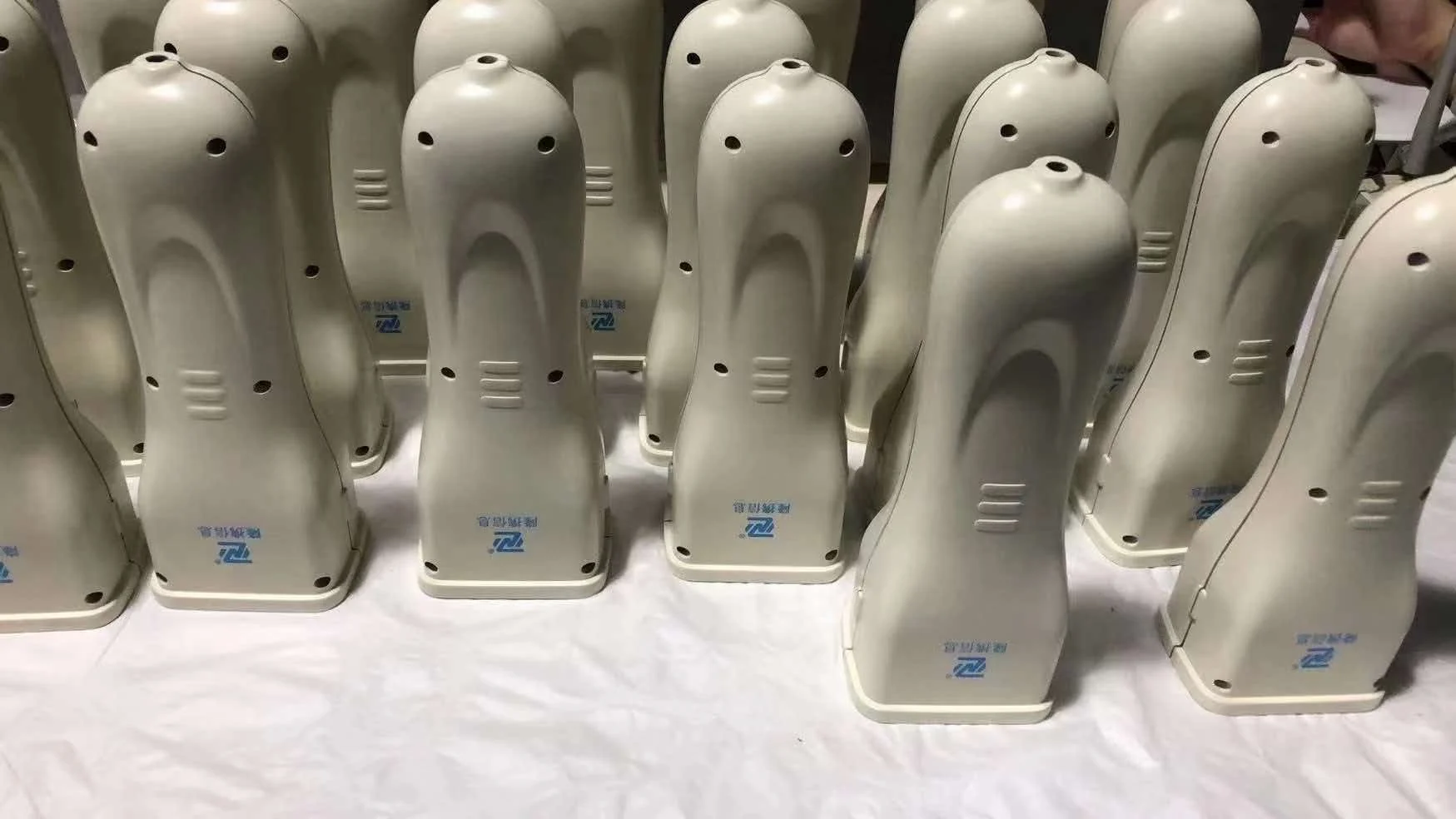
FDM 3D printing lets industrial equipment manufacturers produce custom tooling and fixtures faster and at lower cost than traditional machining. Jinghui 3D provides FDM printing alongside precision mold making and vacuum casting, enabling a practical path from prototype to low-volume production in e
For industrial equipment manufacturers, custom tooling and fixtures made with FDM 3D printing can cut lead times and production costs while maintaining the dimensional stability required on the factory floor. FDM builds parts layer by layer from engineering thermoplastics, allowing jigs, gauges, and assembly aids to be produced in days rather than weeks. Jinghui 3D offers FDM 3D printing as part of a broader manufacturing service portfolio.
Jinghui 3D’s integrated services—FDM, SLA, and SLS 3D printing, precision mold making, and vacuum casting—enable industrial equipment builders to handle everything from one-off fixtures to low-volume production runs with a single partner. This reduces supplier qualification time and supports a cost-effective manufacturing strategy.
Why FDM 3D Printing Works for Tooling and Fixtures
FDM (Fused Deposition Modeling) is an additive manufacturing process that extrudes molten thermoplastic filament through a heated nozzle, building parts layer by layer. For tooling and fixtures, this process offers three practical advantages:
- Design freedom for ergonomic and functional features. Unlike machining, which removes material, FDM can create complex internal channels, integrated handles, and lightweight honeycomb structures without additional cost.
- Engineering-grade materials. FDM can use ABS, polycarbonate, nylon, and carbon-fiber-filled thermoplastics that withstand repeated clamping, impact, and shop-floor chemicals.
- Fast turnaround and low entry cost. A custom fixture can go from CAD file to physical part in hours or days, with no need for CNC programming or custom tooling.
These benefits are particularly relevant when a production line needs a modified fixture immediately or when a new product variant requires a short-run assembly aid.
Typical Industrial Applications
Custom FDM tooling and fixtures are used across many industrial equipment manufacturing scenarios. Common examples include:
- Assembly jigs that hold components in precise alignment during fastening or welding.
- Inspection gauges and go/no-go templates for quality control.
- End-of-arm tooling for robotic pick-and-place systems.
- Protective covers and cable management brackets for machinery.
- Spare part replacement for legacy equipment where original tooling is no longer available.
- Ergonomic workholding devices that reduce operator strain.
In each case, the ability to quickly iterate on a design and print a modified version the next day can significantly reduce downtime and improve production flow.
A Practical Workflow for Custom Tooling
Implementing FDM tooling in an industrial equipment environment follows a structured process:
- Define the functional requirements. Identify the part geometry, mating interfaces, load conditions, and environmental factors such as temperature or chemical exposure.
- Design for FDM. Optimize the model for layer orientation, minimize overhangs, and add fillets or ribs where needed. CAD software can simulate printability.
- Select the appropriate material. Choose a thermoplastic that matches the mechanical and thermal needs. For example, carbon-fiber-filled nylon offers high stiffness for heavy-duty fixtures, while ABS is a cost-effective choice for lighter assembly aids.
- Print and post-process. Produce the part on an industrial FDM machine. Remove support material, sand critical surfaces, or tap holes if threaded inserts are required.
- Validate on the production line. Test the fixture under real conditions, measure accuracy, and make any necessary adjustments. Because FDM is digital, a revised version can be printed quickly.
- Scale as needed. When tooling proves successful and volumes increase, the same digital file can be used to produce metal or molded parts through traditional manufacturing.
Jinghui 3D supports this workflow with FDM 3D printing, precision mold making, and vacuum casting, allowing manufacturers to move from a printed prototype fixture to a production-grade tool when the application demands it.
Comparison: FDM vs. Traditional Machining
The table below compares FDM 3D printing with conventional CNC machining for typical tooling and fixture applications.
| Attribute | FDM 3D Printing | Traditional CNC Machining |
|---|---|---|
| Initial setup cost | Low—no custom tooling required | High—custom fixtures and CAM programming needed |
| Lead time for first part | Hours to a few days | Days to weeks, depending on machine availability |
| Geometric complexity | High—internal channels and organic shapes possible | Limited by tool access and subtractive constraints |
| Material options | Engineering thermoplastics (ABS, PC, nylon, composites) | Metals and engineering plastics |
| Strength and isotropy | Moderate—anisotropic due to layer adhesion | High—isotropic, fully dense material |
| Best for | Custom jigs, fixtures, prototypes, short-run production | High-volume, high-precision, and metal parts |
FDM is not a universal replacement for CNC machining. However, for custom tooling and fixtures that need fast turnaround, design flexibility, and cost-effective production of low-volume parts, FDM offers a clear advantage. Combining both methods allows manufacturers to use FDM for rapid iteration and CNC for final high-precision components when required.
Material Selection for Durable Fixtures
Choosing the right FDM material is critical for tooling that must withstand repeated use. Common engineering thermoplastics include:
- ABS: Good impact resistance and dimensional stability; suitable for general-purpose jigs and covers.
- Polycarbonate (PC): High strength and heat resistance; ideal for fixtures exposed to moderate temperatures or mechanical stress.
- Nylon: Excellent wear resistance and flexibility; often used for snap-fit components and parts requiring toughness.
- Carbon-fiber-filled nylon or PC: Increased stiffness and reduced warping; suitable for large fixtures and high-load applications.
- ASA: UV and weather resistance; useful for tooling used outdoors or in harsh environments.
Jinghui 3D offers FDM 3D printing with a range of engineering plastics, allowing industrial equipment manufacturers to match the material to the specific demands of the fixture. For applications requiring higher detail or different material properties, Jinghui 3D also provides SLA and SLS printing, which can produce parts in resin or nylon.
From Tooling to Low-Volume Production: The Jinghui 3D Advantage
Custom tooling is often the first step in a broader manufacturing need. Once a fixture or jig has been validated, the same design data can be used to produce end-use parts for the industrial equipment itself. Jinghui 3D’s service portfolio covers this transition:
- FDM 3D printing produces strong, functional prototypes and end-use parts in engineering plastics.
- Precision mold making and tooling supports injection molding and low-volume production of plastic and rubber components.
- Vacuum casting replicates 20–100+ polyurethane parts from a single silicone mold, providing production-grade finishes without the cost of hard tooling.
- New-material R&D and in-house manufacturing-process development ensure that the company stays at the forefront of material and process development.
For industrial equipment manufacturers, working with a single partner that offers both additive and traditional manufacturing services simplifies sourcing, reduces communication errors, and shortens the path from concept to production. Whether the goal is a set of custom assembly fixtures or a bridge production run of machine components, Jinghui 3D’s capabilities align with cost-effective manufacturing strategies.
Frequently Asked Questions
Q: What tolerances can FDM-printed fixtures achieve? FDM tolerances typically range from ±0.1% to ±0.5% of the part dimension, depending on the machine, material, and geometry. For critical locating features, post-processing such as drilling or adding metal inserts can improve accuracy. When tighter tolerances are required, combining FDM with CNC machining or using SLA printing is often recommended.
Q: Is FDM suitable for fixtures that will be used repeatedly in production? Yes, with the right material selection and design. Engineering thermoplastics like nylon and carbon-fiber-filled nylon offer excellent wear resistance and stiffness. Proper layer orientation, increased infill density, and the use of metal inserts at wear points can extend the service life of FDM fixtures significantly. For extremely high-load or abrasive environments, a hybrid approach using FDM for the body and metal for inserts may be more appropriate.
Q: How does FDM compare to injection molding for custom tooling? FDM is ideal for one-off or low-volume tooling because it requires no mold and can be printed directly from a CAD file within hours or days. Injection molding has high upfront tooling costs and longer lead times but becomes cost-effective at higher volumes (typically thousands of parts). For custom tooling and fixtures, where quantities are often small and design changes are frequent, FDM is usually the more cost-effective choice.